
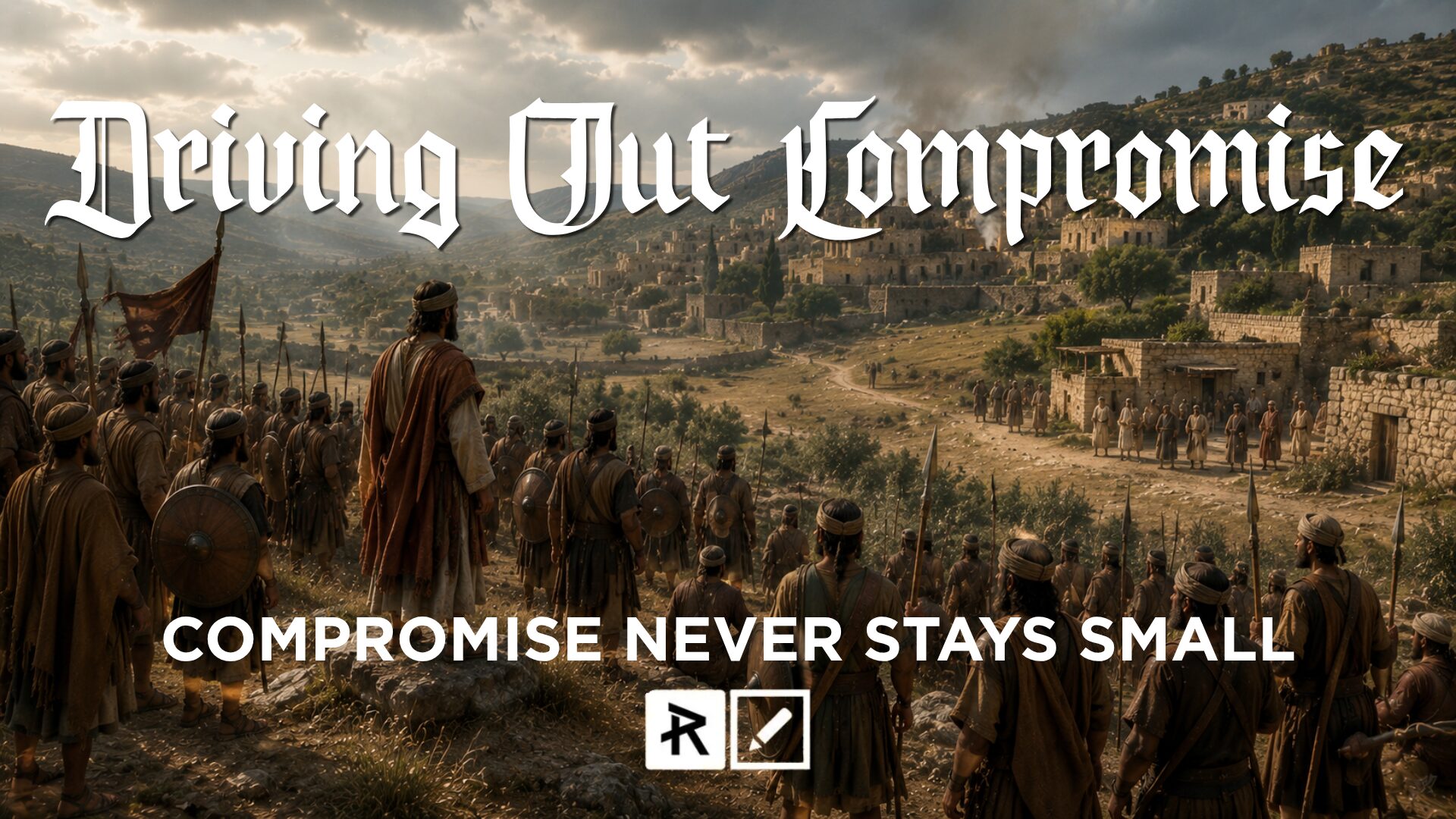
The Tragedy of Incomplete Obedience
“Yet the people of Israel did not drive out…” (Joshua 13:13). That phrase is one of the quiet tragedies of Scripture. God promised victory. God granted the land. Yet Israel allowed their enemies to remain.
Joshua 15:63 says, “But the Jebusites… the people of Judah could not drive out, so the Jebusites dwell with the people of Judah at Jerusalem to this day.” What was meant to be conquered was tolerated. What was tolerated became embedded.
Men do this spiritually. We compartmentalize sin. We assume it can remain contained—private, managed, harmless. But Paul warns, “Do you not know that a little leaven leavens the whole lump?… Cleanse out the old leaven” (1 Corinthians 5:6–7). Compromise never stays small.
The Tragedy of Incomplete Obedience
God commanded Israel: “You must devote them to complete destruction… make no covenant with them” (Deuteronomy 7:2). The Hebrew yarash means to dispossess, to drive out. The land was promised (Joshua 1:3), but promise still required obedience.
Incomplete Obedience Is Still Disobedience
Psalm 106 records the result: “They did not destroy the peoples… but mingled with the nations and learned their practices” (vv. 34–35). Coexistence became corruption. False gods followed. Generational decay followed. Eventually, exile followed.
The Jebusites remained until David conquered Jerusalem (2 Samuel 5:6–10). The Geshurites reappear when David marries Maacah; their son Absalom rebels (2 Samuel 3:3). Compromise breeds consequences. You cannot coexist with the enemy and expect peace.
You Cannot Conquer Alone
Judges 1 tells us tribes attempted conquest but failed. Effort was not enough. As men, our instinct is self-reliance: try harder, discipline more, suppress desire. But sin is not driven out by willpower.
David ultimately finished what Judah could not—he conquered Jerusalem. The king accomplished what the people failed to do. This foreshadows Christ. “For the weapons of our warfare are not of the flesh but have divine power to destroy strongholds” (2 Corinthians 10:4–5, ESV). Jesus, the greater David, storms the strongholds within us. At the cross, He decisively defeated sin and death.
Charles Spurgeon wrote, “The conquest may be delayed by unbelief, but not denied. What God gives, He enables us to take.” Victory begins with surrender.
Full Victory Is Found in Full Surrender
God does not call men to partial obedience. He calls us to total allegiance. Do not leave your Jebusites in the land. By the power of the greater Joshua, the greater Gideon, the greater David—Jesus Christ—we can drive out compromise and walk in lasting victory.
How to Drive Out Compromise
1. Lift Your Eyes to the Lord.
You can not and do not have to do this alone. Psalm 121:1–2 reminds us, “My help comes from the Lord.” Shift your focus from the enemy to your Deliverer.
2. Identify Your Jebusite
Call it what it is. Sexual immorality. Dishonesty. Spiritual apathy. Neglect of leadership at home. Silence in prayer. You cannot conquer what you refuse to name.
3. Tear Down and Rebuild
Gideon destroyed the altar of Baal before he led Israel (Judges 6). Then he built an altar to the Lord. Replace vice with virtue. “Do not be overcome by evil, but overcome evil with good” (Romans 12:21). Where compromise existed, build discipline. Where passivity ruled, establish leadership. Where sin consumed, let righteousness flourish.