SAVED FOR A GREATER PURPOSE
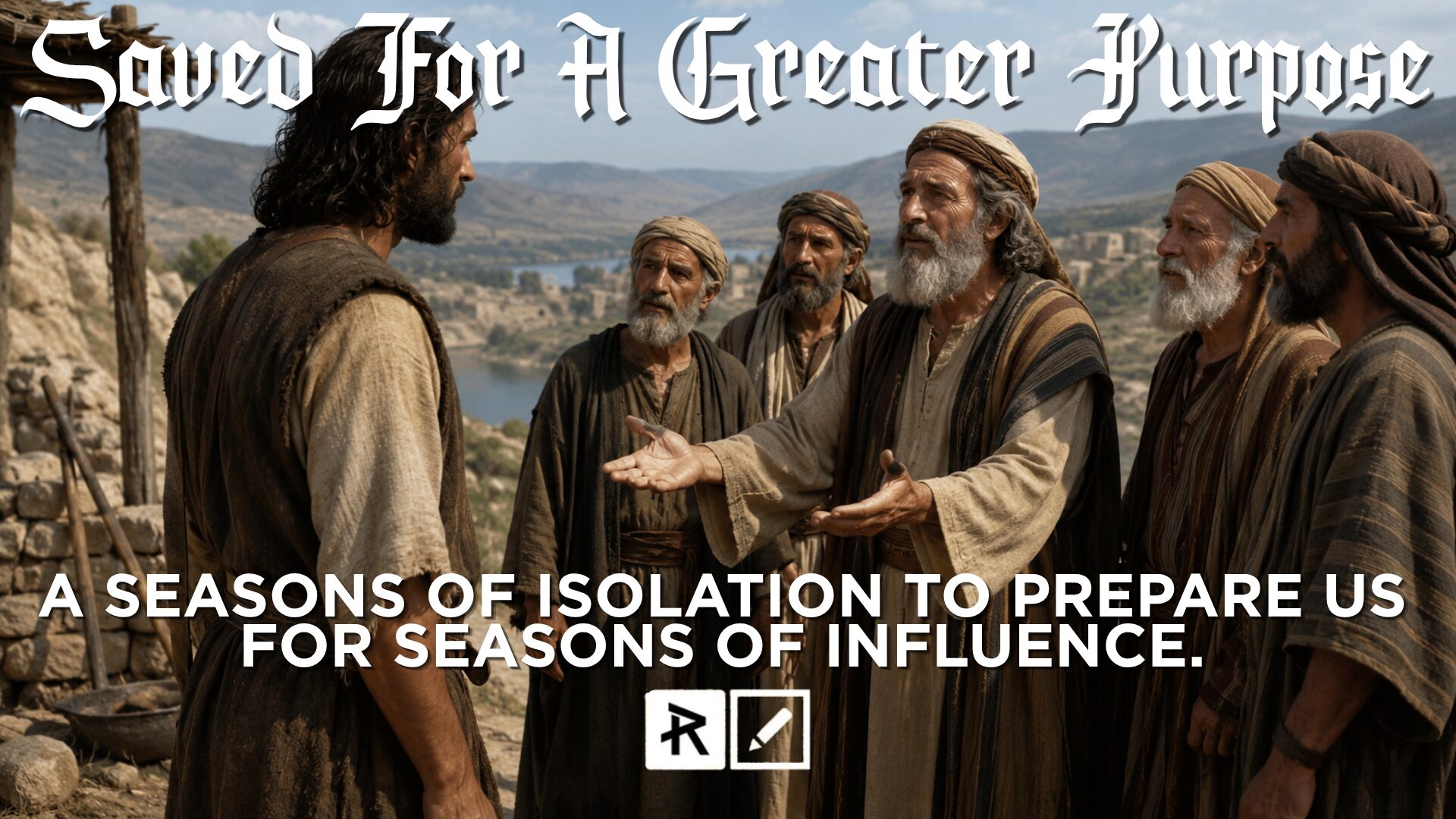
The Story Of Jephthah Reminds Us That God Wastes Nothing.
There are seasons when it feels like you’ve been pushed to the margins of your own story. Relationships become strained. Family grows distant. Friends no longer understand your convictions. The people who once knew you best no longer recognize the person God is shaping you to become.
If you’ve ever felt overlooked, abandoned, or forgotten, the story of Jephthah reminds us that God wastes nothing.
A Mighty Warrior in Exile
In Judges 11, we meet Jephthah, a mighty warrior whose life began with rejection. Because he was the son of a prostitute, his brothers drove him away, denying him his inheritance and forcing him into exile. He settled in the land of Tob, where other outcasts gathered around him. To many, it appeared his story had already been written and rejected by his family. Cast aside by society. Living far from home. Yet God was not finished with him.
When Israel found itself under attack from the Ammonites, the very elders who had allowed Jephthah to be cast out came searching for him, stating, “Come and be our leader, that we may fight against the Ammonites. “Jephthah’s response is one that many of us can relate to: “Did you not hate me and drive me out of my father’s house? Why have you come to me now when you are in distress?” (Judges 11:7)
The people who once rejected him now recognized that God had been preparing the very man they had overlooked.
When Your Past Precedes You
Like Jephthah, many of us carry a reputation that precedes us. Our friends and coworkers often know the version of ourselves that we choose to present. But no one knows our history quite like our family. They remember the hot-headed version of us—the one who made poor decisions. The person before Christ began His work in our hearts.
When we surrender our lives to Jesus, we begin putting off the old self and walking in obedience. We stop compromising. Our priorities change. We pursue holiness instead of popularity. Ironically, those changes don’t always bring acceptance. Sometimes they bring distance. Sometimes they make us “unintentionally uninvited” because following Christ means being pushed away, because we’re no longer willing to compromise our convictions.
The Land of Tob
Being driven into Tob may have looked like defeat, but Tob was known as a good land, a refuge for outsiders. In many ways, the church is our modern-day Tob. It is a refuge where broken people are restored, disciples are formed, and God prepares ordinary people for extraordinary purposes. Whether you’ve followed Christ for forty years or you have taken your first step of faith, you’ve entered a place where broken people are being restored together.
The world may see believers as weak, outdated, or even foolish. Yet here, among God’s people, He is shaping men into something far greater. The church is where disciples are sharpened. It is where wounded hearts are healed. Where warriors are prepared, but God isn’t simply raising warriors. He is raising priests.
Your Exile Has a Purpose
God often uses seasons of isolation to prepare us for seasons of influence. The place that feels like exile may be your training ground. Every hardship. Every disappointment. Every lonely season, every difficult conversation and sacrifice made to follow Christ. God is using it to prepare you for a greater assignment.
Jesus heals our deepest wounds not simply so we can move on, but so we can become instruments of healing for others. He restores us so we can restore. He comforts us so we can comfort. He saves us so we can faithfully serve.
More Than a Warrior
A warrior fights battles. A priest stands in the gap. God’s desire is not merely to make you spiritually strong but spiritually available. There will come a day when your family and friends experience crisis. When sickness strikes, when a marriage begins to crumble, when anxiety overwhelms someone you love, when death visits your home.
In those moments, they won’t simply need someone who can solve problems. They will need someone who knows how to pray. Someone who can lead with wisdom instead of panic, who can point hurting people to Christ, someone willing to intercede on behalf of others.
Like Jephthah, there may come a day when the very people who once rejected you remember the transformation God has accomplished in your life. Not because you became successful or because you have proved them wrong. But because Christ made you into someone they could turn to when hope seemed lost.
The Return of the Priest
Jephthah didn’t simply return home as a warrior. He returned as a leader. Likewise, God is preparing His people to return to their families, workplaces, neighborhoods, and communities as spiritual leaders who reflect Christ. Your calling extends beyond surviving your season of exile. You are being equipped to bring peace where there is conflict, hope where there is despair, prayer where there is fear, and the presence of Christ into places that desperately need Him. The rejection you experienced is not the end of your story. It may simply be the beginning of God’s preparation.
So, let me leave you with this question: Have you allowed Jesus to make you mission-ready?
The world doesn’t simply need more strong men. It needs faithful priests, men who will stand before God on behalf of their families, lead with humility, love sacrificially, and point others to Jesus Christ. Perhaps the season you’re in right now isn’t punishment, or God hiding you.
Perhaps it’s God preparing you.
One day He may call you to return not simply as someone who survived rejection, but as a priest who brings the hope of Christ to those who once overlooked you.
Application Questions
1. Where in your life do you feel like Jephthah in the land of Tob — pushed to the margins, overlooked, or exiled from the place you once belonged? How might God be using that season to prepare you rather than punish you?
2. Has following Christ ever created distance between you and people who used to know you well? How did you respond, and how do you view that distance now — as loss, or as evidence of real change?
3. A warrior fights battles; a priest stands in the gap for others. Who in your life needs you to show up not with answers or strength, but with prayer and presence? What would it look like to step into that role for them this week?
SAVED FOR A GREATER PURPOSE Read More »